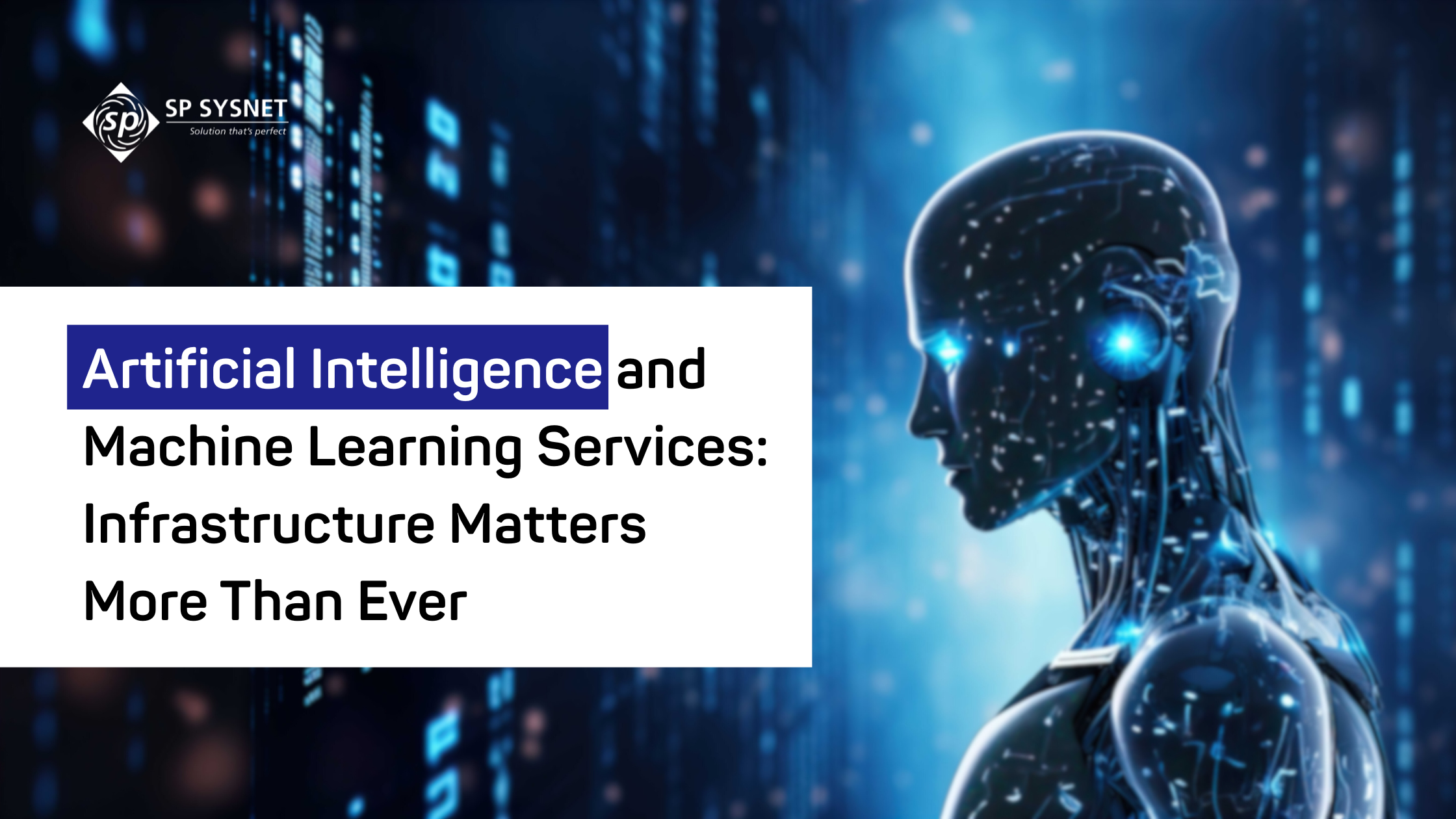

In the fast-evolving world of technology, Artificial Intelligence and Machine Learning service providers are at the forefront of innovation. From predictive analytics to intelligent automation, these providers are transforming industries across the globe. However, behind every successful AI or machine learning solution lies a critical component that is often overlooked: robust and scalable infrastructure. Without powerful infrastructure, even the most advanced algorithms cannot perform efficiently, and businesses may struggle to achieve their full potential.
The Growing Demands of AI and Machine Learning
Artificial intelligence (AI) and machine learning (ML) are computationally intensive processes. Training AI models involves analyzing massive datasets, performing complex mathematical calculations, and iteratively refining algorithms. For instance, training a deep learning neural network can require processing millions of data points and performing billions of computations. This workload demands high-performance computing resources, including powerful CPUs, GPUs, large memory capacity, and high-speed storage systems.
Furthermore, AI and ML solutions often require real-time processing. Applications such as autonomous vehicles, fraud detection systems, and recommendation engines need instantaneous responses. Any delay in processing can compromise functionality and user experience. Therefore, AI and machine learning service providers must invest in infrastructure capable of handling heavy workloads while ensuring low latency and high reliability.
Cloud vs On-Premises Infrastructure
One of the primary considerations for Artificial Intelligence and Machine Learning service providers is whether to leverage cloud-based infrastructure or maintain on-premises systems. Both options come with advantages and challenges.
Cloud Infrastructure offers scalability, flexibility, and cost efficiency. Providers can access high-performance computing resources on demand, allowing them to scale operations as needed. Popular cloud platforms also provide managed AI and ML services, pre-configured environments, and integrated tools, which reduce deployment time. However, cloud solutions may involve recurring costs and dependency on internet connectivity, which can impact performance in certain scenarios.
On-Premises Infrastructure, on the other hand, provides full control over hardware, data security, and performance optimization. Organizations with sensitive data or strict compliance requirements often prefer on-premises solutions. While the upfront investment can be substantial, having dedicated servers, high-end GPUs, and optimized storage systems ensures that AI workloads run efficiently and without interruption.
The Importance of High-Performance Computing
High-performance computing (HPC) is the backbone of modern AI and ML operations. GPUs, in particular, have revolutionized the way machine learning models are trained. Unlike traditional CPUs, GPUs are designed to handle parallel processing, allowing AI models to process large datasets simultaneously. This dramatically reduces training times and accelerates model development.
Additionally, AI and machine learning service providers require high-speed storage systems and large memory capacity to store and process data efficiently. Solid-state drives (SSDs) and NVMe storage solutions provide the low-latency performance necessary for real-time applications. Network infrastructure is equally critical; fast, reliable networks ensure smooth data transfer between servers, storage devices, and end-users.
Data Management and Security
Another aspect where infrastructure plays a vital role is data management. AI and ML systems rely heavily on data quality, consistency, and availability. Scalable storage systems, backup solutions, and data pipelines ensure that data is accessible and secure. Moreover, with the increasing concerns around data privacy and regulatory compliance, Artificial Intelligence and Machine Learning service providers must implement robust security measures. This includes encryption, access controls, and regular monitoring to safeguard sensitive information.
Edge Computing for Real-Time AI
In addition to cloud and on-premises solutions, edge computing is becoming a crucial part of AI infrastructure. Edge computing involves processing data closer to its source rather than relying solely on centralized servers. This reduces latency and allows real-time decision-making for AI applications, such as smart cities, industrial IoT, and autonomous devices. Investing in edge infrastructure allows AI and machine learning service providers to expand their capabilities and deliver faster, more efficient services.
Future-Proofing AI Infrastructure
The AI landscape is continuously evolving, with new algorithms, models, and applications emerging every day. To stay competitive, service providers must future-proof their infrastructure. This means adopting flexible, scalable systems that can accommodate increasing workloads and emerging technologies. Containerization, virtualization, and hybrid cloud architectures enable providers to deploy AI solutions quickly and efficiently, without being constrained by existing hardware limitations.
Furthermore, energy-efficient infrastructure and sustainable computing practices are becoming increasingly important. AI workloads can consume significant power, and optimizing infrastructure for energy efficiency not only reduces costs but also aligns with global sustainability goals.
Choosing the Right Infrastructure Partner
For AI and machine learning service providers, selecting the right infrastructure partner is crucial. Providers need a partner that understands the complexities of AI workloads, offers scalable and secure solutions, and provides ongoing support to ensure smooth operations. From high-performance servers and storage solutions to network optimization and cloud integration, the right infrastructure partner can make a significant difference in performance, cost efficiency, and service reliability.
In conclusion, AI and Machine learning service providers cannot afford to overlook the importance of robust infrastructure. High-performance computing, scalable storage, secure data management, and real-time processing capabilities are essential components that ensure AI solutions operate efficiently and deliver meaningful results. By investing in powerful infrastructure, service providers can stay ahead in a competitive market, enhance service quality, and meet the growing demands of their clients.
When it comes to reliable infrastructure solutions for AI and ML workloads, SP Sysnet stands out as a trusted partner, providing cutting-edge technology and support that empowers Artificial Intelligence and Machine Learning service providers to achieve operational excellence.
FAQs
Why do Artificial Intelligence and Machine Learning service providers need powerful infrastructure?
AI and ML models process large amounts of data and perform complex calculations. Powerful infrastructure ensures faster training, accurate results, and smooth performance without system slowdowns.
What type of infrastructure is essential for AI and ML workloads?
AI and ML service providers require high-performance servers, GPUs, scalable cloud resources, fast storage, and reliable networking to handle data-intensive tasks efficiently.
Can cloud infrastructure support Artificial Intelligence and Machine Learning services?
Yes, cloud infrastructure offers flexibility, scalability, and cost efficiency. It allows service providers to scale resources based on workload demands without heavy upfront investments.
How does strong infrastructure improve AI and ML project outcomes?
A robust infrastructure reduces processing time, supports advanced model development, improves system reliability, and enables faster deployment of AI and ML solutions for clients.