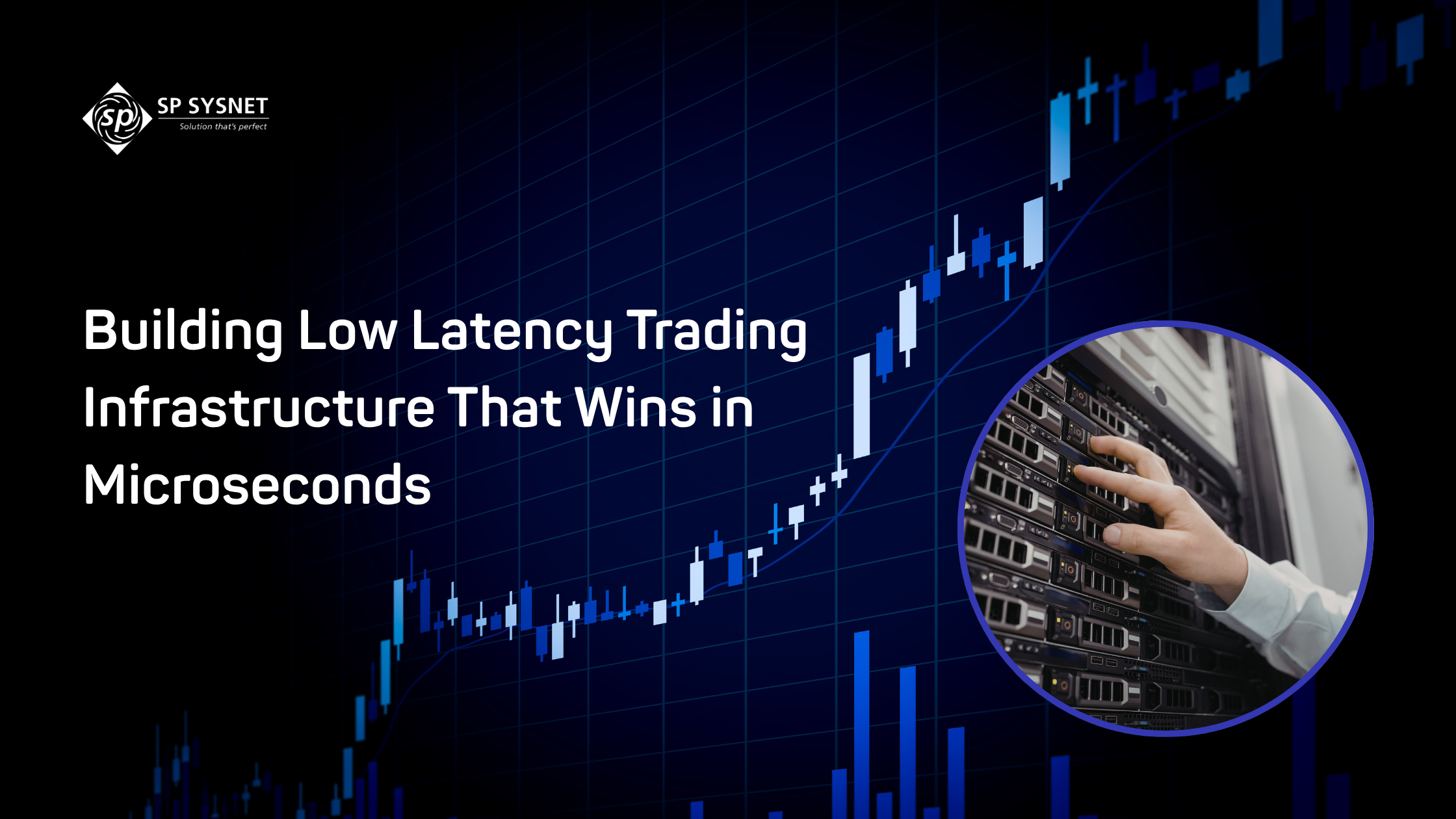

Speed decides trading success. Financial markets move in microseconds, and even a small delay can affect trade execution. Firms that operate algorithmic and high frequency trading systems depend on Low Latency Trading Infrastructure to process market data and send orders instantly. A carefully designed Low Latency Infrastructure allows trading platforms to react to market movements faster than competitors.
Trading firms must optimize every layer of their technology environment. Network design, server configuration, and exchange connectivity all influence execution speed. Infrastructure built specifically for financial markets ensures that systems perform consistently during high volume trading periods.
Why Low Latency Matters in Financial Markets?
Modern trading platforms process thousands of data points every second. Algorithms analyze market feeds, identify opportunities, and execute trades within microseconds.
Any delay between receiving market data and sending orders can reduce profitability. Trading firms therefore invest in infrastructure that minimizes latency across networks and computing environments.
Low latency trading infrastructure ensures faster data processing, rapid order execution, and consistent performance under heavy workloads. Reliable infrastructure gives traders the speed advantage required to compete in global capital markets.
Core Components of Low Latency Trading Infrastructure
Several technology layers influence latency within a trading environment. Organizations must optimize each component to achieve microsecond level performance.
High performance servers process trading algorithms and market data streams. These systems require fast processors, optimized memory configurations, and advanced network interfaces.
Network infrastructure also plays a major role. Low latency switches and direct exchange connectivity reduce delays in packet transmission.
Trading environments often use kernel bypass networking and specialized network drivers to reduce processing overhead. These technologies allow applications to interact directly with network hardware.
Infrastructure providers design these environments carefully to reduce latency across the entire technology stack.
Optimizing Server Performance for Trading Workloads
Trading servers operate under intense processing demands. Algorithms continuously analyze market feeds and execute large volumes of orders.
High performance computing platforms ensure that trading engines process information without delays. Optimized BIOS settings, CPU tuning, and memory configurations improve processing speed.
Low latency infrastructure also benefits from specialized hardware acceleration technologies. These include FPGA acceleration and network interface tuning that reduce packet processing time.
Trading firms working with experienced infrastructure providers gain access to optimized server platforms designed specifically for capital market workloads.
Network Architecture for Ultra Fast Execution
Network design determines how quickly trading platforms communicate with exchanges and market data providers. Even small network delays can affect execution performance.
Infrastructure architects design networks that minimize hops between trading systems and exchange gateways. High performance switching platforms reduce packet handling time across the network.
Direct exchange connectivity further improves execution speed. Trading firms often colocate servers near exchange infrastructure to reduce physical network distance.
Low latency infrastructure also uses precision time synchronization systems. Accurate timestamps help firms measure performance and maintain regulatory compliance.
Monitoring and Maintaining Infrastructure Performance
Achieving low latency requires continuous monitoring and performance tuning. Infrastructure teams analyze network metrics, system performance, and application response times.
Monitoring tools detect latency spikes, packet loss, or hardware inefficiencies that may affect trading performance. Engineers can quickly adjust configurations to maintain optimal speed.
Infrastructure optimization also involves firmware updates, system tuning, and capacity planning. Continuous monitoring ensures that trading systems operate consistently during high market activity.
Why Do Trading Firms Work With SP Sysnet?
Building high performance trading environments requires deep expertise in infrastructure design and financial market technology.
SP Sysnet supports financial institutions with advanced infrastructure solutions for trading environments. Their team designs and deploys Low Latency Trading Infrastructure using high performance servers, optimized networking platforms, and direct exchange connectivity.
Organizations benefit from faster execution speeds, stable trading environments, and infrastructure designed for demanding financial workloads. With the right technology strategy and infrastructure partner, trading firms can build systems that compete effectively in microsecond driven markets.