
In a world where businesses depend heavily on technology to operate, compete, and innovate, selecting the right technology partner becomes a strategic decision rather than a technical one. Organizations working with experienced companies such as Sp Sysnet understand that sustainable growth depends on choosing a reliable partner who supports both present operations and future ambitions. A dependable partnership allows businesses to adopt modern technologies confidently while maintaining stability and security.
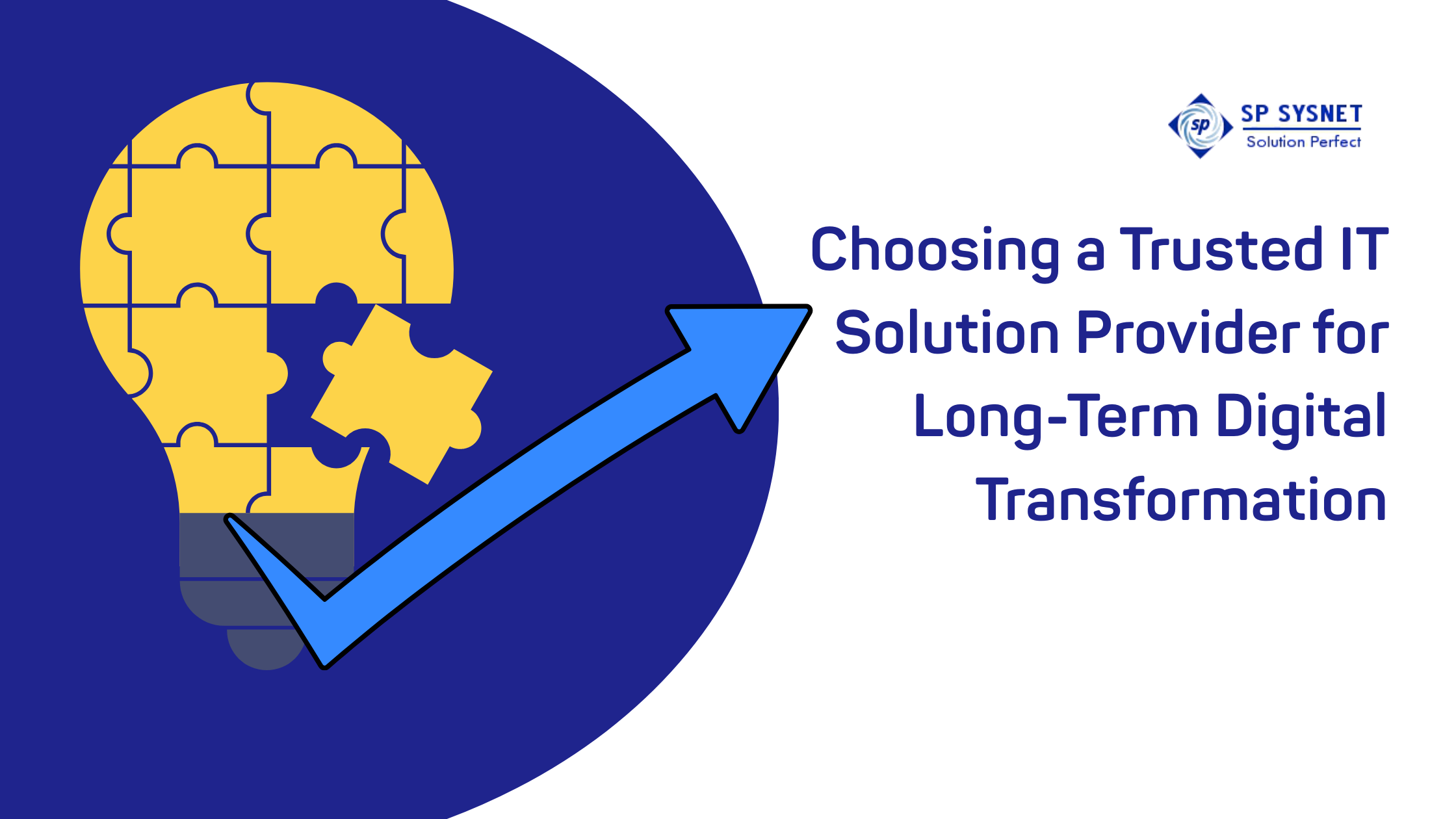
A trusted IT solution provider helps organizations move beyond short term fixes and build a roadmap for long term digital transformation. Instead of reacting to problems, companies gain a structured approach to modernization, risk management, and operational efficiency.
Why Does the Right Partner Matters?
Digital transformation is not a single project. It is a continuous journey involving system upgrades, new applications, security improvements, and evolving customer expectations. Many organizations struggle because they treat technology changes as isolated activities rather than part of a unified strategy. An experienced IT Solution Provider evaluates business goals, operational challenges, and future expansion plans before recommending solutions. This ensures that every technology investment supports growth instead of creating additional complexity.
A reliable provider helps businesses:
- Improve operational efficiency
- Enhance customer experience
- Protect sensitive information
- Support workforce productivity
- Prepare for future innovations
When technology decisions align with business strategy, transformation becomes manageable and measurable.
Strategic Assessment and Planning
The first step in long term transformation is understanding the current environment. A professional trusted solution provider begins with a detailed assessment of infrastructure, applications, workflows, and security posture. This evaluation identifies gaps that may affect performance or scalability. Instead of suggesting immediate replacements, the provider designs a phased roadmap. Organizations can upgrade systems gradually without disrupting daily operations. Strategic planning ensures that each improvement fits into a broader vision rather than becoming an isolated upgrade.
Managed Cloud Infrastructure for Scalability
Cloud adoption has become essential for modern enterprises. Businesses require flexible environments that support remote teams, high traffic applications, and continuous data processing. However, unmanaged cloud usage can lead to security concerns and rising costs. Managed Cloud Infrastructure allows companies to scale resources based on demand while maintaining control over performance and expenses. A structured cloud approach supports collaboration, remote access, and global operations without constant hardware investments. With proper management, organizations benefit from reliability and adaptability while focusing on core business activities.
Strengthening Security and Compliance
As organizations expand digitally, security risks also increase. Data breaches and unauthorized access can damage both finances and reputation. Cyber Security Services therefore play a central role in digital transformation. A dependable IT Solution Provider integrates security into every layer of technology rather than treating it as an additional feature. Continuous monitoring, access management, and vulnerability assessments help maintain protection across systems. Strong security practices not only prevent threats but also ensure compliance with regulatory requirements, which is essential for industries handling sensitive information.
Network Infrastructure for Reliable Operations
Digital transformation requires seamless communication between systems, employees, and customers. Poor connectivity affects productivity and customer satisfaction. Network Infrastructure Management ensures stable connections and optimized data flow across locations. Monitoring tools identify performance issues early, preventing operational interruptions. Reliable networking allows teams to collaborate effectively and customers to access services without delays. This stability forms the backbone of digital business operations.
Data Protection and Business Continuity
Data is one of the most valuable assets for any organization. Loss of information due to hardware failure or cyber incidents can halt operations. A structured approach to protection is therefore necessary. Data Backup and Disaster Recovery solutions safeguard critical information and allow quick restoration during disruptions. Regular backups and recovery planning ensure continuity even during unexpected events. A trusted solution provider helps organizations maintain resilience by preparing for both technical and operational risks.
Supporting Workforce Productivity
Modern work environments are no longer limited to office spaces. Employees access systems from homes, branch offices, and mobile devices. Providing consistent and secure access is essential for productivity. End User Computing solutions centralize management of devices and applications. Employees can work efficiently without complex configurations while administrators maintain control and security. When users experience fewer technical barriers, they can focus on meaningful work instead of troubleshooting.
Continuous Monitoring and Optimization
Technology environments evolve constantly. Without monitoring, performance issues may remain unnoticed until they affect operations. Long term transformation requires continuous improvement rather than one time deployment. An experienced IT Solution Provider tracks performance, analyzes usage patterns, and recommends improvements regularly. Systems remain optimized as business requirements change. This proactive approach prevents downtime and ensures consistent service quality.
Building a Future Ready Organization
Digital transformation prepares organizations for emerging technologies such as advanced analytics and automation. A structured infrastructure allows businesses to adopt new capabilities without rebuilding systems repeatedly. By integrating Managed Cloud Infrastructure, Cyber Security Services, Network Infrastructure Management, Data Backup and Disaster Recovery, and End User Computing, businesses create a unified environment ready for expansion. Instead of reacting to market changes, organizations become capable of adapting quickly and confidently.
Evaluating the Right Provider
Choosing the right partner involves more than comparing pricing. Businesses should consider expertise, support quality, and long term commitment. A provider should act as a consultant rather than just a vendor.
Important factors include:
- Understanding of business processes
- Ability to provide scalable solutions
- Commitment to security and compliance
- Proactive support and monitoring
A dependable partner becomes part of the organization’s growth journey.
Long Term Value Over Short Term Fixes
Many businesses invest in quick solutions to solve immediate issues. While this may provide temporary relief, it often leads to fragmented systems and increased costs later. A strategic approach focuses on sustainability and integration. A trusted solution provider ensures that every upgrade contributes to a unified environment. Over time, organizations experience fewer disruptions and better resource utilization. Long term planning reduces risk and improves operational confidence.
Conclusion
Digital transformation requires careful planning, reliable support, and consistent improvement. A knowledgeable Trusted IT solution provider helps organizations align technology with business objectives while maintaining security and efficiency across the environment. By adopting structured solutions companies build strong operational foundations. With guidance from an experienced IT Solution Provider like Sp Sysnet, businesses can move forward with confidence, knowing their technology environment supports sustainable growth and continuous innovation.