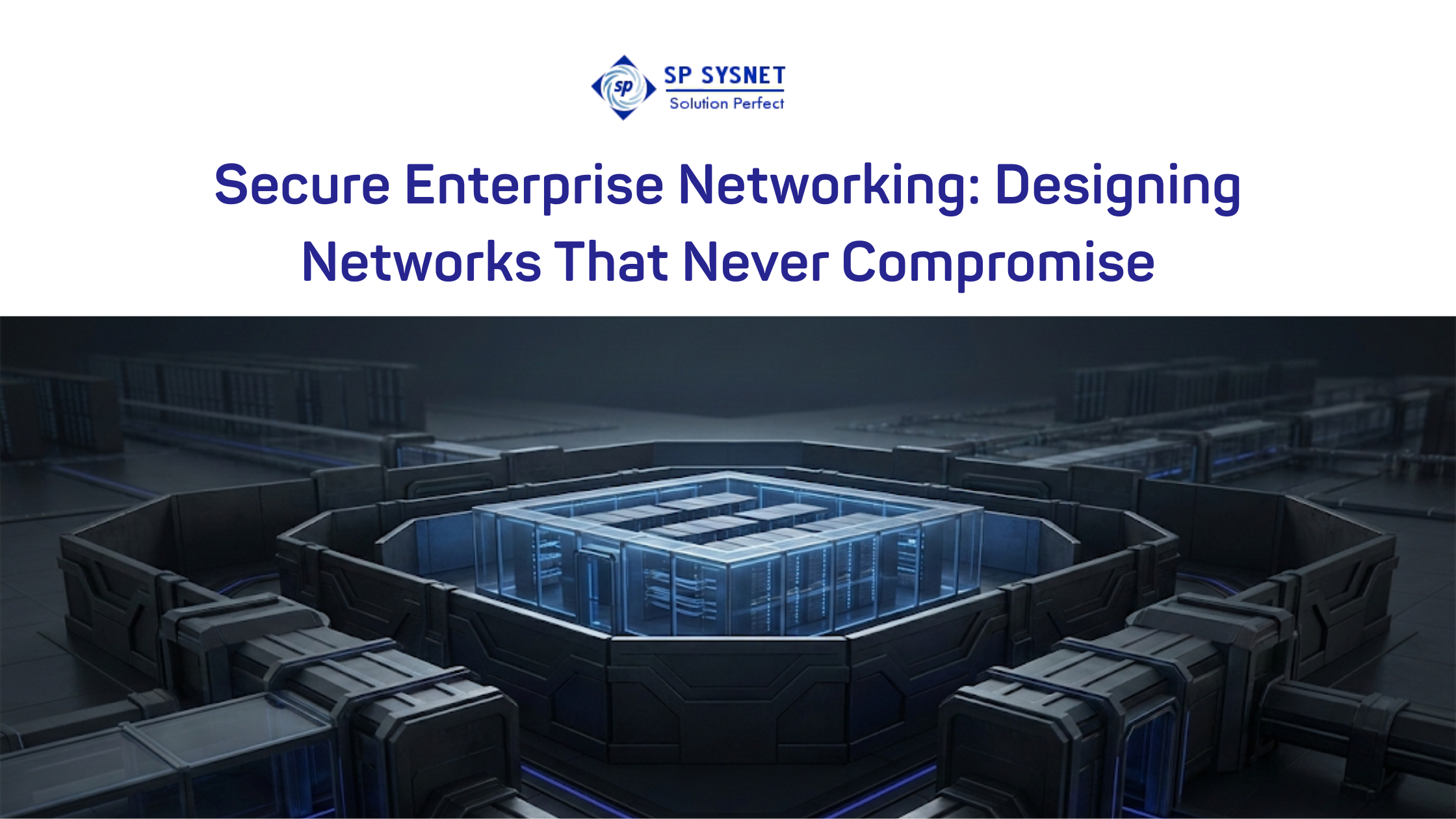

Modern businesses depend on networks for almost everything—communication, data sharing, cloud access, and daily operations. When a network is weak or poorly designed, it becomes an easy target for cyber threats, downtime, and data loss. That is why secure enterprise networking is no longer optional. It is a core requirement for any organization that wants to grow safely and confidently.
This blog explains what secure enterprise networking means, why it matters, and how businesses can design networks that never compromise on safety.
What Is Secure Enterprise Networking?
Secure enterprise networking refers to designing and managing business networks with strong security at every layer. It protects data, applications, devices, and users from unauthorized access, cyberattacks, and internal risks.
Unlike traditional networks that focused mainly on connectivity, modern secure networks are built with security as a foundation. This approach ensures that protection is not added later but is part of the network from the start.
Why Network Security Matters More Than Ever?
Today’s enterprises face constant threats such as malware, ransomware, phishing, and data breaches. With remote work, cloud services, and mobile devices becoming common, networks are more complex than before.
Here’s why secure enterprise networking is critical:
- Protects sensitive data like customer information and business records
- Prevents downtime caused by cyberattacks or system failures
- Ensures compliance with industry regulations and data laws
- Builds trust with customers, partners, and stakeholders
- Supports business growth without increasing risk
A secure network keeps the business running smoothly, even when threats evolve.
Core Principles of Secure Enterprise Networking
To design networks that never compromise, businesses should follow some key principles:
1. Security by Design
Security should be part of the network architecture from day one. Firewalls, access controls, and monitoring tools must be built into the design, not added as an afterthought.
2. Least Privilege Access
Users and devices should only get access to what they truly need. This reduces damage if an account is compromised.
3. Network Segmentation
Dividing the network into smaller segments limits how far a threat can spread. If one area is affected, others remain protected.
4. Continuous Monitoring
Threats change every day. Constant monitoring helps detect unusual activity early and respond before damage occurs.
Key Components of Secure Enterprise Networking Solutions
Effective Secure enterprise networking solutions combine technology, processes, and policies. Some essential components include:
Firewalls and Intrusion Prevention
Firewalls act as the first line of defense by controlling traffic entering and leaving the network. Intrusion prevention systems help detect and block suspicious activities in real time.
Secure Connectivity
Virtual Private Networks (VPNs) and encrypted connections protect data when employees access systems remotely or work from different locations.
Identity and Access Management
Strong authentication methods like multi-factor authentication ensure that only verified users can access critical systems.
Endpoint Security
Every connected device—laptops, mobiles, servers—must be secured. Endpoint protection helps stop malware and unauthorized access at the device level.
Cloud and Hybrid Security
As businesses move to cloud and hybrid environments, network security must extend beyond physical offices. Secure integration between on-premise and cloud systems is essential.
Designing Networks That Never Compromise
A strong network is not just about tools; it’s about smart design. Here’s how businesses can create networks that remain secure at all times:
- Plan for scalability so security grows with the business
- Standardize security policies across all locations and users
- Automate security updates to reduce human error
- Regularly test and audit the network for vulnerabilities
- Educate employees about basic security practices
When security is treated as an ongoing process, the network stays resilient against new threats.
Benefits of a Secure Enterprise Network
Investing in secure enterprise networking brings long-term advantages:
- Reduced risk of cyberattacks
- Better performance and reliability
- Faster detection and response to threats
- Lower recovery costs after incidents
- Peace of mind for management and IT teams
A secure network allows businesses to focus on innovation and growth instead of constant worry about breaches.
The Future of Enterprise Networking Security
The future of networking is moving toward automation, artificial intelligence, and zero-trust models. Zero trust means never assuming anything inside or outside the network is safe without verification. This approach strengthens protection in complex environments.
Organizations that adopt modern Secure enterprise networking solutions today will be better prepared for tomorrow’s challenges.
Conclusion
Designing networks that never compromise requires the right strategy, tools, and expertise. Secure enterprise networking is about protecting data, ensuring uptime, and supporting business goals without risk. By building security into every layer of the network, enterprises can stay strong in a constantly changing digital world. For businesses looking to implement reliable and future-ready network security, trusted technology partners like SP Sysnet play a vital role in delivering secure, scalable, and dependable enterprise networking solutions.