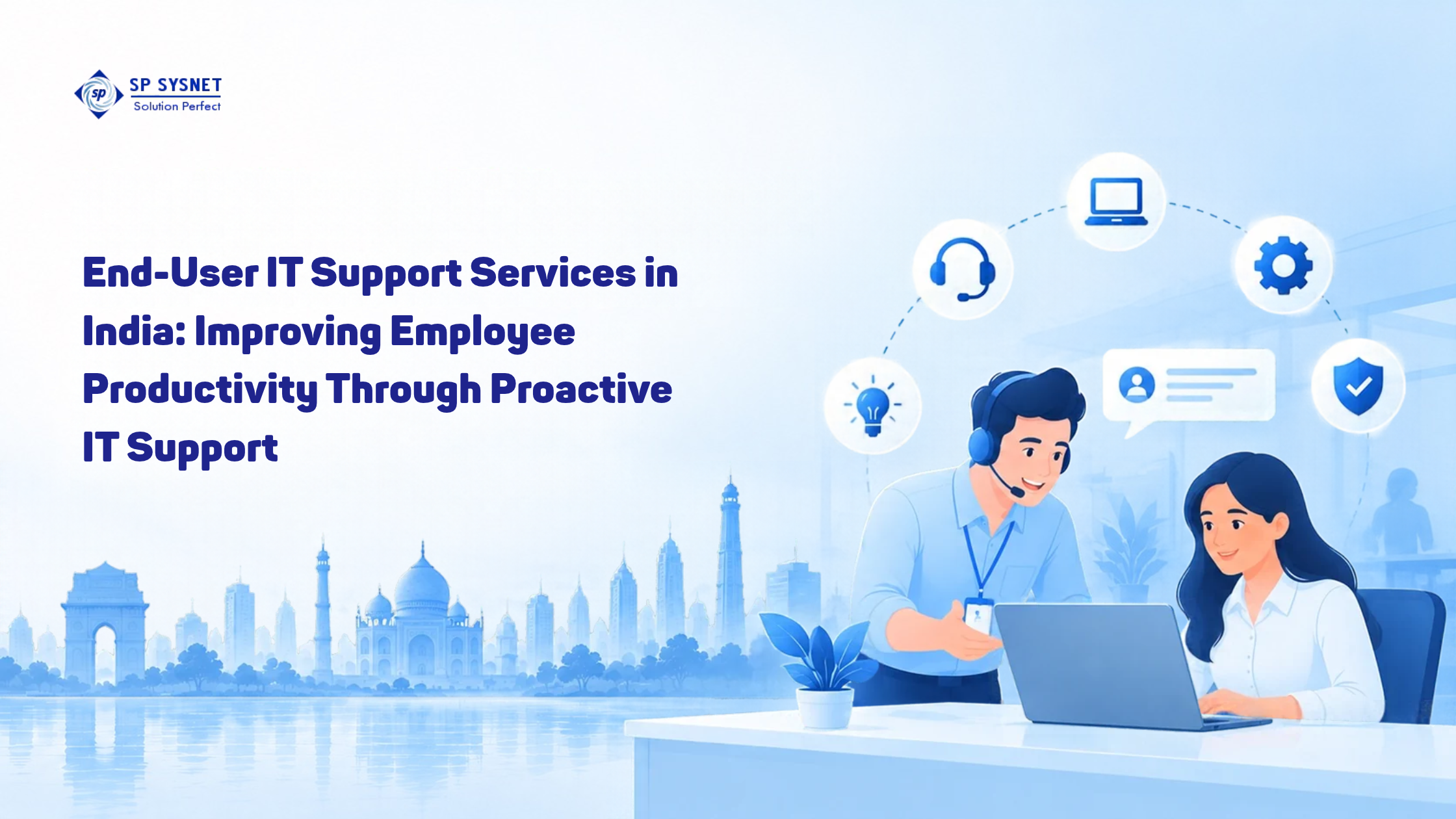

Indian employees lose around 16 hours a month to everyday tech problems. That’s the highest of nine countries in TeamViewer’s 2025 digital friction research. It works out to two working days gone, a few minutes at a time. A frozen laptop here, a locked account there, a VPN that drops just before a client call. Good end-user IT support services exist to win back those hours. The best ones go further and stop many of the problems before anyone notices them.
A Tuesday Made of Small Interruptions
Picture an account manager at a mid-sized firm in Pune. Her laptop takes eight minutes to boot because an update has been pending for weeks. At eleven, Excel crashes and takes an unsaved file with it. After lunch, her password expires mid-meeting and she’s locked out of the CRM. She raises a ticket, then waits.
None of these problems is serious on its own. Together, they quietly eat most of the morning. Multiply that across fifty people and the cost becomes very real. Nexthink’s 2025 workplace productivity report found the average employee runs into 14 tech disruptions every week.
The Hidden Cost Goes Beyond Lost Time
TeamViewer’s global findings put the average loss at 1.3 working days a month. The damage doesn’t stop at productivity. In the same study, 69% of respondents believed digital friction had contributed to employee turnover. India showed the strongest link between tech friction and staff leaving, at 73%.
That changes how IT support should be viewed. It isn’t only a cost centre that fixes broken things. It affects how people feel about their work, and whether they stay. For companies buying IT support services in India, retention is a fair thing to factor into the decision.
Reactive Versus Proactive: What Actually Changes
Many businesses start with reactive support. Something breaks, someone calls, a technician fixes it. Proactive support flips the order, so problems are spotted and fixed before they interrupt anyone. You’ll always need some reactive help. The trouble is that it only starts once someone has already lost time.
| Reactive support | Proactive support | |
| When work starts | After an employee reports a problem | When monitoring spots an early warning |
| Updates and patches | Installed whenever someone gets to them | Scheduled, tested and pushed out on time |
| Repeat problems | Fixed one ticket at a time | Traced to a root cause and solved once |
| New joiners | Laptop set up on their first morning | Device and access ready before day one |
| What employees notice | Waiting | Very little, which is the point |
The shift matters because some problems never get reported at all. People restart, work around the glitch and carry on frustrated. Proactive end-user IT support services catch those silent issues through device and application monitoring.
What Good End-User IT Support Services Cover
Before Anything Breaks
This is the proactive layer. Devices are monitored for health, storage and performance. Updates and security patches go out on a schedule rather than piling up. Software is kept consistent across teams, so fewer odd one-off problems appear. Nexthink’s research suggests that improving digital experience scores by ten points can recover 22 minutes per employee each week.
When Something Does Break
Fast, friendly help still matters. A clear way to raise issues, remote fixes where possible and someone on site when needed. Good IT support services in India also keep employees informed, so nobody is left guessing whether their ticket was seen.
Around the Edges
Onboarding and offboarding are easy to overlook. New staff should have a working laptop and the right access on day one. Leavers should lose access the same day. Training matters too. SP Sysnet’s end user IT training covers everyday software and cyber security awareness, which cuts down on avoidable tickets.
How to Tell if Support is Actually Working
It’s tempting to judge IT support by how quickly the phone gets answered. A few other numbers give a much clearer picture of what employees actually experience:
- First-contact resolution: how often a problem is fixed on the first attempt
- Time to resolve: not just time to respond
- Repeat tickets: the same issue coming back means the root cause wasn’t fixed
- Employee satisfaction: a quick rating after each ticket closes
- Proactive fixes: issues resolved before anyone reported them
If your current provider can’t share these, ask why. Strong end-user IT support services should be happy to show their numbers every month. Ongoing managed IT services that monitor, maintain and support your systems make this kind of reporting much easier.
Fewer Interruptions, More Real Work
Nobody joins a company to spend their afternoon restarting a laptop. Every small fix that happens before an employee notices is time handed back to real work. That’s the promise of proactive end-user IT support services, and it’s measurable. Want help finding where your team is losing hours? SP Sysnet can take a look at your current setup.
FAQs
- What are end-user IT support services?
They cover the technology employees use every day. That includes laptops, desktops, phones, software, email, printers and account access. Support usually combines help desk, remote fixes, on-site visits and proactive monitoring. The aim is to keep people working, not just to close tickets.
- How is proactive IT support different from a help desk?
A help desk responds when someone reports a problem. Proactive support monitors devices and systems to catch issues early. It also tackles root causes, so the same problem stops coming back. Most good setups combine both approaches.
- Can IT support services in India work for remote and hybrid teams?
Yes. Most fixes can be handled remotely, with device monitoring working wherever staff are. On-site visits can be arranged for hardware problems or new setups. Clear updates on each ticket matter even more when the team is spread out.
- Does better IT support really affect staff retention?
Research suggests it can. In TeamViewer’s 2025 study, 69% of respondents believed tech friction contributed to employee turnover. India showed the strongest link, at 73%.
- What should a small business expect from end-user IT support?
A simple way to raise issues, quick remote fixes and regular patching. Onboarding and offboarding support and a monthly report on what was fixed should also be standard. Pricing often depends on the number of users and devices.