

| Sector | High Frequency / Algorithmic Trading |
| Firm type | Proprietary HFT firm, Singapore-headquartered |
| Situation | Infrastructure migration from incumbent provider |
| Core problem | Latency SLA breaches causing quantifiable revenue loss |
| Services delivered | HFT Infrastructure Rebuild, Low Latency Trading Servers, Arista Switching, Co-location Optimisation |
| Result | 88% reduction in execution latency — strategies fully restored |
Background
By mid-2023, a Singapore-headquartered proprietary trading firm had a problem they could measure to the microsecond, and were losing money because of it.
The firm had been operating on infrastructure managed by a third-party provider for just over two years. When the relationship began, the setup was adequate for the scale of their operation. But as their algorithmic trading strategies grew more sophisticated and their order flow increased, the infrastructure that had once been sufficient began showing its ceiling. Latency was climbing. Spikes were becoming more frequent. And the provider’s response repeatedly citing SLA compliance on paper metrics that had no relationship to actual trading performance had exhausted the firm’s patience entirely.
What made this situation different from a typical vendor dissatisfaction story was the evidence. The firm’s quant team had spent three months building an internal latency accounting model: a system that mapped every microsecond of execution delay to its direct revenue impact, strategy by strategy, session by session. They were not working from intuition. They had a document that showed, in precise figures, what their current infrastructure was costing them in missed fills, degraded alpha capture, and lost arbitrage windows across SGX and regional venues.
They came to us with that document. They were not asking for a proposal, they were asking whether we could match what they needed. If we could not give them a credible answer, they were prepared to keep looking.
The Challenge
The latency accounting model the firm presented was one of the most rigorous infrastructure briefs we have received. It did not describe symptoms, it described causes, mapped to P&L consequences. The core findings were stark:
- Average round-trip execution latency of 18 microseconds — against a strategy requirement of under 3 microseconds for meaningful alpha capture on their primary SGX equity strategies
- Between 12 and 18 latency spike events per trading session, each causing their algorithms to miss fill windows during the exact moments of highest market opportunity
- An order fill rate of 81% during peak volume — meaning nearly one in five intended executions was failing to complete at the target price
- Estimated revenue impact of the latency gap quantified across a six-month period, documented strategy by strategy
- Provider SLA reports showing green across all contractual metrics — none of which measured what actually mattered to a high frequency trading operation
The SLA gap was not a technicality. It illustrated a fundamental mismatch between what a generic infrastructure provider defines as acceptable performance and what ultra high frequency trading actually demands. The firm had been paying for a service that looked compliant on paper and was failing them in practice, every single trading day.
| “Our previous provider kept telling us we were within SLA. We kept showing them our P&L. Those two things should not be able to coexist — and yet they did, for far too long.”
— Chief Technology Officer, Singapore HFT Firm |
The Solution
The first thing we told the client was that we would not take their money until we had independently verified their latency data ourselves. Their model was sophisticated, but we needed to instrument the actual environment, their current infrastructure, in their co-location environment, under live conditions, before we could responsibly commit to improvement targets.
We ran a two-week latency path forensic across every layer of their existing stack. What we found confirmed their model and added further detail: the primary source of latency variance was not their servers, it was the switching fabric. The generic enterprise switches their incumbent provider had deployed were introducing unpredictable queuing delays during burst traffic conditions, precisely the moments when execution speed is most critical. Secondary contributors included suboptimal NIC configuration and a co-location rack position that added unnecessary cable distance to the exchange hand-off point.
With the diagnosis confirmed, we designed a full infrastructure replacement — built, tested, and validated in parallel with the live environment so that no trading session would be disrupted during the migration.
| Stage | What We Did |
| Latency Path Forensics | Before recommending a single piece of hardware, we ran a full latency path audit across their existing environment — NIC to switch to co-location hand-off — logging actual microsecond data at each hop to confirm exactly where time was being lost |
| Infrastructure Migration Plan | Designed a zero-disruption migration plan: the new low latency trading infrastructure would be built, tested, and validated in parallel before any live strategies were cut over — no downtime, no blind go-live |
| Low Latency Server Rebuild | Replaced the existing server stack with purpose-built high frequency trading servers configured for kernel bypass networking, DPDK-accelerated packet processing, and NUMA-optimised memory allocation for their specific algorithm architecture |
| Arista Switch Deployment | Deployed Arista ultra low latency switches with cut-through forwarding and hardware timestamping, replacing the previous provider’s generic enterprise switching fabric that had been the primary source of latency variance |
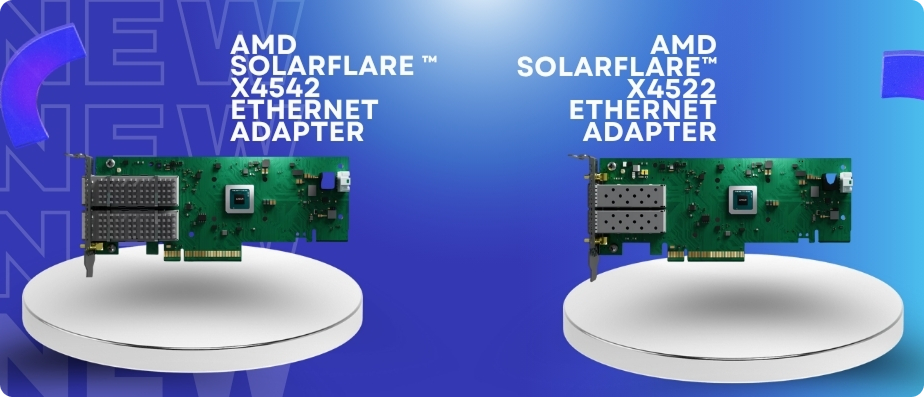
| Solarflare NIC Integration | Integrated AMD Solarflare X4 series network interface cards for wire-speed, kernel-bypass execution — the same NIC architecture used by tier-one HFT operations globally |
| Co-location Optimisation | Renegotiated and repositioned their co-location footprint within Singapore’s financial data centre to reduce physical cable distance to exchange matching engines — recovering latency that no software optimisation could address |
| Parallel Validation & Cutover | Ran both environments simultaneously for two weeks of live market data, confirming latency benchmarks were consistently met before the full cutover was executed during a low-volume session |
Infrastructure migrations for live HFT operations carry a category of risk that does not exist in most IT environments. There is no maintenance window that justifies a trading outage. There is no rollback that recovers a missed session. The migration had to work — and it had to work the first time.
We built the replacement low latency trading infrastructure in a parallel co-location environment over four weeks, running it against live market data feeds without executing any real orders. Every latency benchmark the client’s quant team had specified was tested and validated independently before we recommended proceeding.
For two weeks prior to cutover, both environments ran simultaneously. The client’s team had full visibility into the latency telemetry from both stacks in real time. When the data confirmed that the new infrastructure was consistently delivering sub-2 microsecond round-trip latency — and that the spike events that had plagued the old environment were no longer appearing — the cutover decision was made by the client, on their terms, during a low-volume session of their choosing.
From the moment the cutover completed, the old environment was decommissioned. There was no period of running both systems at cost. There was no ambiguity about which infrastructure was live. The migration was clean, documented, and complete.
Results
The following performance comparison was measured by the client’s own quant team using their internal latency accounting model — the same methodology they had used to document the cost of their previous provider’s underperformance.
| Performance Metric | Previous Provider | After Migration | Improvement |
| Avg. execution latency (round trip) | 18μs | < 2μs | −88% |
| Latency spike frequency (per session) | 12–18 events | < 1 event | −93% |
| Order fill rate during peak volume | 81% | 98.6% | +17.6pp |
| Strategy alpha capture rate | Degraded | Restored | Full recovery |
| Infrastructure-related downtime (monthly) | 4.2 hrs avg. | 0 hrs | 100% eliminated |
| “The parallel validation process was what gave us confidence. We did not take anyone’s word for it — we watched the latency data in real time for two weeks before we flipped the switch. The numbers held. They have held every day since.”
— Head of Quantitative Strategies, Singapore HFT Firm |
Why it Worked
Infrastructure migrations fail in HFT environments for two reasons: the replacement is not actually better, or the transition introduces risk that causes its own damage. We addressed both.
The performance improvement was real because we diagnosed the problem correctly before we proposed a solution. The Arista ultra low latency switches were selected specifically because their cut-through forwarding architecture eliminates the store-and-forward queuing that had been the primary source of variance in the old environment. The AMD Solarflare NICs were selected because kernel bypass at the NIC level removes the operating system from the execution path entirely. These were not generic upgrades, they were precise interventions against precisely identified failure points.
The migration was safe because we refused to cut over until the data said it was safe. No target, no deadline, and no commercial pressure accelerated that decision. The client’s quant team controlled the go/no-go call, armed with two weeks of live comparative data. That structure is the only responsible way to migrate a live high frequency trading operation.
As an established HFT infrastructure provider and ultra low latency trading service provider in Singapore, we have built our practice on the understanding that trading infrastructure is not an IT category — it is a revenue infrastructure category. Every component we specify, every configuration we apply, and every migration we execute is evaluated against that standard.
In the twelve months since the migration, the firm has expanded its APAC strategy footprint significantly. The low latency trading infrastructure we delivered has scaled with that growth without performance degradation — order flow has increased materially, and execution latency has remained below 2 microseconds throughout.
The latency accounting model the firm’s quant team built to document the cost of their previous provider is now used in a different context: as a quarterly infrastructure performance review tool, measuring the ongoing return on their technology investment. The same rigour that exposed the problem is now used to confirm the solution is holding.
They have since engaged us to evaluate infrastructure requirements for two additional APAC trading venues as part of their regional expansion roadmap.
Services Delivered
- Full latency path forensic audit across existing HFT infrastructure
- Purpose-built high frequency trading servers — kernel bypass, DPDK, NUMA-optimised
- Arista ultra low latency switches — cut-through forwarding, hardware timestamping
- AMD Solarflare X4 Series NICs for wire-speed, kernel-bypass execution
- Co-location footprint optimisation — rack repositioning and cable path reduction
- Parallel infrastructure validation — two-week live market data benchmarking
- Zero-downtime cutover execution
- Ongoing managed infrastructure support for live HFT trading operations
Client identity and strategy-specific figures have been anonymised at the client’s request. Performance metrics reflect data recorded by the client’s internal quantitative team using their proprietary latency accounting model.