
| Sector | High Frequency Trading / Proprietary Trading |
| Firm type | Independent HFT firm expanding into APAC markets |
| Location | Singapore (primary), with regional connectivity across APAC |
| Services delivered | HFT Infrastructure, Low Latency Trading Servers, Arista Ultra Low Latency Switches, Co-location, Network Architecture |
| Hardware deployed | Purpose-built HFT servers, Arista low latency switches, Solarflare NICs |
| Outcome | Sub-2 microsecond execution latency achieved at scale |
The Client
The client was a European-headquartered proprietary trading firm with an established HFT operation running across major exchanges in their home region. Having identified Singapore and the broader APAC markets as a significant growth opportunity, particularly on SGX and across regional equities and derivatives venues, they began the process of establishing a local trading presence in early 2024.
Their initial attempts to adapt their existing European infrastructure for APAC operations had made one thing clear: the setup that worked for them at home would not survive the demands of trading in this region. The combination of geographic distance, different market microstructure, and rapidly growing trade volumes meant that latency and scalability were no longer performance metrics; they were existential concerns. A single missed arbitrage window or a throttled algorithm during a volatility spike represented real, quantifiable revenue loss.
They reached us through an introduction from a technology partner already operating in the Singapore financial ecosystem. What they brought to the table was not a vague brief; it was a precise set of requirements. They needed ultra-low latency trading infrastructure built and operational within Singapore’s financial data center environment, with the capacity to scale as their APAC book grew. They had a go-live window. They did not have room for a vendor who would learn on the job.
We were selected as their HFT infrastructure provider in Singapore following a competitive evaluation process that included a full technical review of our capabilities, our co-location partnerships, and our experience deploying low-latency trading server environments for institutional trading operations.
The Challenge
Before a single server was racked, we spent two weeks in deep technical discovery with the client’s quant and infrastructure teams. The goal was to understand not just where they were, but where their trading strategies would take them over the next 18 to 24 months. Scaling the wrong architecture quickly is just as damaging as not scaling at all.
| Infrastructure Challenge | Trading Impact |
| Legacy servers unable to handle growing order book depth and message throughput | Missed arbitrage windows during peak Asian market sessions |
| Network switches introducing unpredictable latency spikes | Execution latency inconsistency of up to 40 microseconds during volatility events |
| No co-location presence in Singapore financial exchange ecosystem | Competitive disadvantage against APAC-native HFT firms on SGX and regional venues |
| Infrastructure scaled manually, no automated provisioning for volume surges | Trading algorithms throttled during high-volume events to prevent system overload |
| Single point of failure in core switching fabric | Risk of full trading desk outage with no redundancy or failover |
Our Approach
We designed and deployed a purpose-built HFT infrastructure stack, from the physical server layer up through the network fabric and connectivity layer, engineered specifically for ultra-high-frequency trading at scale in the APAC region.
| Phase | What We Built |
| Infrastructure Audit | Conducted a full latency path analysis across the client’s existing switching fabric, server stack, and network topology to identify where microseconds were being lost |
| Low Latency Server Deployment | Deployed purpose-built high-frequency trading servers—co-located within Singapore’s financial data center ecosystem—configured for kernel bypass networking and direct market access |
| Network Fabric Upgrade | Replaced legacy switches with Arista ultra-low-latency switches purpose-configured for HFT workloads, with cut-through forwarding and hardware timestamping |
| Co-location & Connectivity | Established co-location presence with direct cross-connects to SGX and regional trading venues, eliminating external network hops from the execution path |
| Redundancy & Failover | Designed fully redundant switching and server architecture with automated failover, eliminating the single point of failure risk that had threatened trading continuity |
| Capacity Scaling | Built an elastic capacity model allowing trading infrastructure to scale programmatically with order flow — no more manual throttling during high-volume sessions |
| “We have worked with infrastructure providers across three continents. What set this team apart was that they understood trading, not just IT. They knew why every microsecond mattered, and they built accordingly. Our APAC operation went live on schedule, on budget, and immediately competitive.”
— Head of Technology Infrastructure, HFT Trading Firm |
The Technical Build In Detail
The low-latency trading server environment was built around a kernel bypass networking architecture, eliminating the operating system from the data path entirely. Network interface cards with hardware-level timestamping and direct memory access allowed trading algorithms to interact with market data and send orders at wire speed, without software-introduced jitter.
The Arista ultra-low latency switches selected for this deployment operate with cut-through forwarding latencies measured in nanoseconds, not microseconds. Hardware timestamping at the port level gave the client’s quant team the granular visibility they needed to tune strategies against actual execution data. We configured the switching fabric with full redundancy: no single component failure could take the trading desk offline.
Co-location within Singapore’s Tier III financial data center infrastructure placed the client’s servers physically as close to exchange matching engines as the market structure allows. Direct cross-connects to SGX and regional venues removed the variability and overhead of external internet routing from the execution path entirely.
The scaling architecture we built allows the client to expand compute capacity in response to growing order flow without manual intervention. As their APAC book has grown over the months since go-live, the infrastructure has absorbed that growth without performance degradation, which was precisely the brief.
The Results
The APAC trading operation went live on schedule. Within the first month of operation, the results against the client’s own benchmarks were unambiguous:
- Execution latency reduced to sub-2 microseconds, a 60% improvement over the legacy infrastructure the client had attempted to adapt for APAC
- Trade volume capacity increased 4x from the initial deployment baseline, with headroom engineered for further growth
- 100% uptime maintained through go-live and the first full month of live trading, including two high-volatility sessions that had historically caused issues on legacy systems
- Zero throttling events recorded during the first quarter; algorithms ran at full capacity through every peak session
- The client’s quant team reported measurable improvement in strategy performance attributable directly to latency consistency, not just raw speed
The firm has since expanded the Singapore infrastructure footprint to support additional trading strategies and has engaged us to evaluate co-location options across two further APAC markets as part of their regional growth roadmap.
Why They Chose Us
As a specialist HFT infrastructure provider and ultra-low latency trading service provider in Singapore, we brought something to this engagement that generic IT vendors could not: we understood the trading environment we were building for. Every design decision, from switch selection to server configuration to co-location strategy, was made with trading performance as the primary constraint, not cost or convenience.
Being an established low-latency trading infrastructure partner in the APAC region meant we had existing relationships with co-location providers, exchange connectivity partners, and hardware vendors that allowed us to move at the pace an institutional trading firm requires. We did not need to learn the ecosystem; we were already operating within it.
For firms looking to establish or scale an ultra-high-frequency trading operation in Singapore and across APAC, infrastructure is not a background consideration. It is a competitive advantage, or a competitive liability. We build it to be the former.
Services & Technologies Delivered
- HFT infrastructure design and deployment — Singapore and APAC
- Low latency trading servers—purpose-built, co-located, kernel bypass configured
- Arista ultra-low latency switches—cut-through forwarding, hardware timestamping
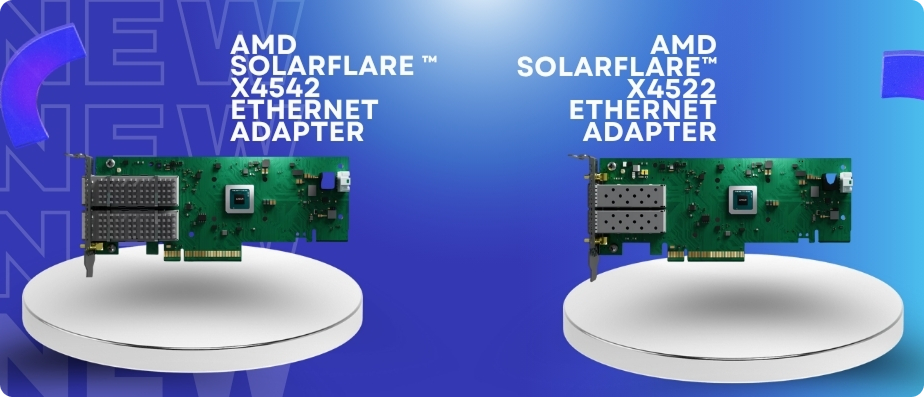
- AMD Solarflare network interface cards for wire-speed execution
- Co-location provisioning within Singapore’s Tier III financial data centres
- Direct cross-connects to SGX and regional trading venues
- Full redundancy and automated failover architecture
- Elastic capacity scaling for growing trade volumes
- Ongoing managed infrastructure support for trading operations
Client identity and specific strategy details have been anonymized at the client’s request. Performance figures reflect metrics recorded during the first quarter of live APAC trading operations.