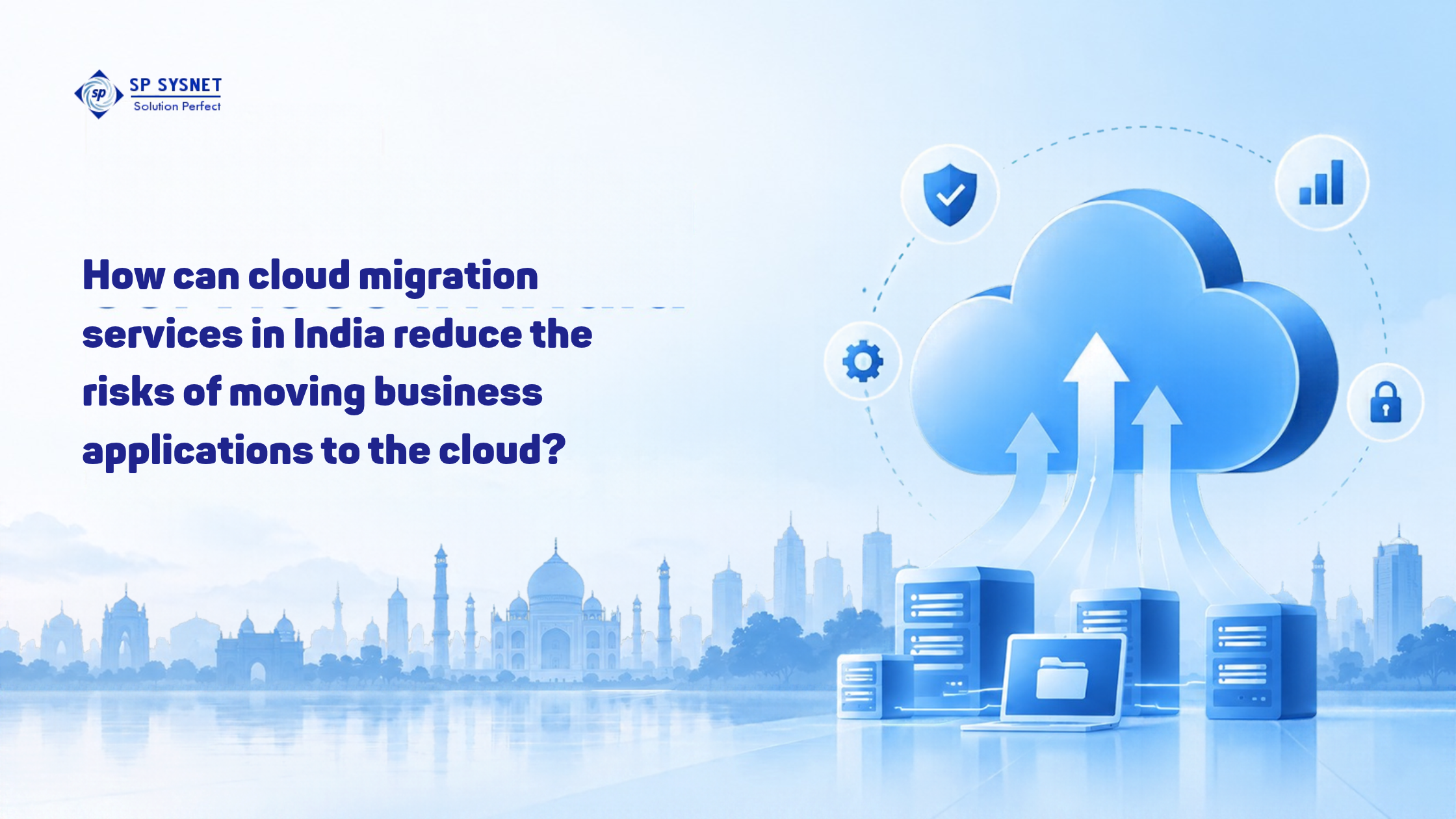

In 2021, McKinsey surveyed nearly 450 CIOs and IT leaders about their cloud journeys. Its estimate was sobering. Around $100 billion of wasted migration spend was expected over the next three years. That money rarely vanishes in one dramatic failure. It leaks out through missed dependencies, unplanned downtime and bills nobody saw coming. This is where the right cloud migration services in India make a real difference. They spot those risks before your applications move.
Why Moving Business Applications Feels Risky
Indian companies are moving to the cloud fast. Gartner forecasts that public cloud spending in India will reach $17.5 billion in 2026, up 28.1% from 2025. More spending means more applications on the move, and each one carries its own baggage. Old integrations, hard-coded IP addresses and forgotten scheduled jobs all show up during a migration. Usually, they show up at the worst possible moment.
Business applications are rarely standalone. Your billing system might talk to an ERP, which feeds a reporting tool used by finance. Pull one piece out without mapping the rest, and something breaks. That chain of hidden connections is the real reason migrations feel so nerve-racking. It is also the first thing a careful partner looks for.
Where Migrations Usually Go Wrong
Cost is the complaint you hear most often. In the Flexera 2026 State of the Cloud Report, 85% of respondents called managing cloud costs their top challenge. Security came next at 82%. The same report estimates that 29% of IaaS and PaaS spend is wasted. Moving oversized workloads as they are, without resizing them, is an easy way to add to that figure.
Downtime is the other big worry, and it gets expensive quickly. In Uptime Institute’s 2025 survey, 57% of respondents said their latest major outage cost over $100,000. One in five said it cost more than $1 million. A rushed cutover weekend can turn into exactly this kind of outage. The good news is that most of these problems are preventable with the right process.
How Cloud Migration Services Reduce Each Risk
Good cloud migration services work a bit like a pre-flight checklist. They slow the first few steps down so the move itself runs smoothly. Nothing gets assumed and nothing gets skipped. Here is how a structured approach deals with each of the risks above, from hidden dependencies to runaway bills.
A Proper Assessment Before Anything Moves
Every safe migration starts with discovery, and good cloud migration services never skip it. The team lists your applications, servers and databases, plus the links between them. They note which systems are business-critical and which can handle a short pause. This dependency map becomes the plan everyone works from. It also shows which applications are not worth moving at all, which saves money straight away.
The Right Migration Path for Each Application
Not every application should move the same way. Some can be lifted and shifted with very few changes. Others are better off on a managed database, or need a partial rebuild. A few old tools are best retired or replaced with a SaaS product. Reliable cloud migration services choose the path application by application, keeping risk and cost under control.
Phased Cutovers that Protect Uptime
Experienced cloud migration services in India rarely move everything in one weekend. They migrate in waves, starting with low-risk applications to prove the process works. Data is synced ahead of time, so the final switch stays short. Every wave has a tested rollback plan. If something misbehaves, users go back to the old system while the team fixes it.
Security Built in From Day One
A new cloud environment should never go live with default settings. Access follows least-privilege rules, and data is encrypted both in transit and at rest. Logging and monitoring are switched on before users arrive, not after. Endpoint protection and web application security should be ready on day one too. That way, the new setup is at least as tight as the old one.
Keeping Cloud Costs in Check
Right-sizing is where a lot of savings hide. Instead of copying an oversized on-premise server, the team matches cloud resources to real usage data. Budgets, alerts and tagging go in early, so nobody gets a surprise invoice. Idle resources get switched off instead of quietly running all month. Ongoing managed IT services keep that discipline going long after the move.
The Compliance Side Indian Businesses Can’t Ignore
Moving to the cloud does not move your legal duties somewhere else. CERT-In’s April 2022 directions require organisations to report specified cyber incidents within six hours of noticing them. The Digital Personal Data Protection Rules, notified in November 2025, add another clock. A detailed breach report must reach the Data Protection Board within 72 hours. Most of these duties apply from May 2027, so now is the time to plan.
That is why cloud migration services should include compliance from the start. Your new environment needs proper logs, access records and an incident response process on day one. Without them, meeting a six-hour reporting window on a brand-new platform is very hard. Building these controls into the migration is far easier than adding them later.
What to Look for in a Migration Partner
The partner you choose matters as much as the plan. When you compare cloud migration services, look for a team that starts with assessment rather than a quote. Ask how they handle rollback, testing and data validation. Check whether they support you after go-live, not just on migration day. Experience across networking, storage and servers helps too, since applications rarely fail for cloud reasons alone.
SP Sysnet brings that wider infrastructure view to every project. Our cloud services team works across AWS, Microsoft Azure and Google Cloud. The same team can look after storage and backup, so your data stays protected before, during and after the move. One partner covering the full stack means fewer handovers and fewer gaps.
Making the Move with Confidence
Cloud migration risks are real, but most of them are predictable. Hidden dependencies, downtime, security gaps and runaway costs all have known fixes. The trick is dealing with them before the first server moves. Working with experienced cloud migration services in India turns a risky leap into a series of measured steps. If you are planning a move, talk to SP Sysnet about where your applications stand today.
FAQs
-
What do cloud migration services usually include?
Most cover assessment, planning, the migration itself, testing and support after go-live. Many providers also handle security setup, cost optimisation and staff training. The aim is simple. Applications should move with minimal disruption and keep running well afterwards.
-
How long does a cloud migration take?
It depends on how many applications you have and how connected they are. A few simple, standalone workloads move much faster than a large estate. Legacy systems with many integrations take the longest. Most cloud migration services in India deliver those in phased waves.
-
Can we migrate without any downtime?
Many applications can move with very little downtime. Data is replicated in advance, and the final switch is scheduled for a quiet period. Some legacy systems still need a short planned outage. A good plan flags these early so nobody is caught off guard.
-
Why use cloud migration services in India instead of an in-house team?
Your in-house team knows the business, but migrations need skills they may only use once. McKinsey found the average company staffs around 35% of its cloud needs in house. An experienced partner fills that gap with tested processes and fewer surprises.