
For most businesses, IT problems rarely arrive at a convenient time.
A network goes down during an important meeting. An employee cannot access a critical application. A server starts showing errors. Or a security issue needs attention immediately.
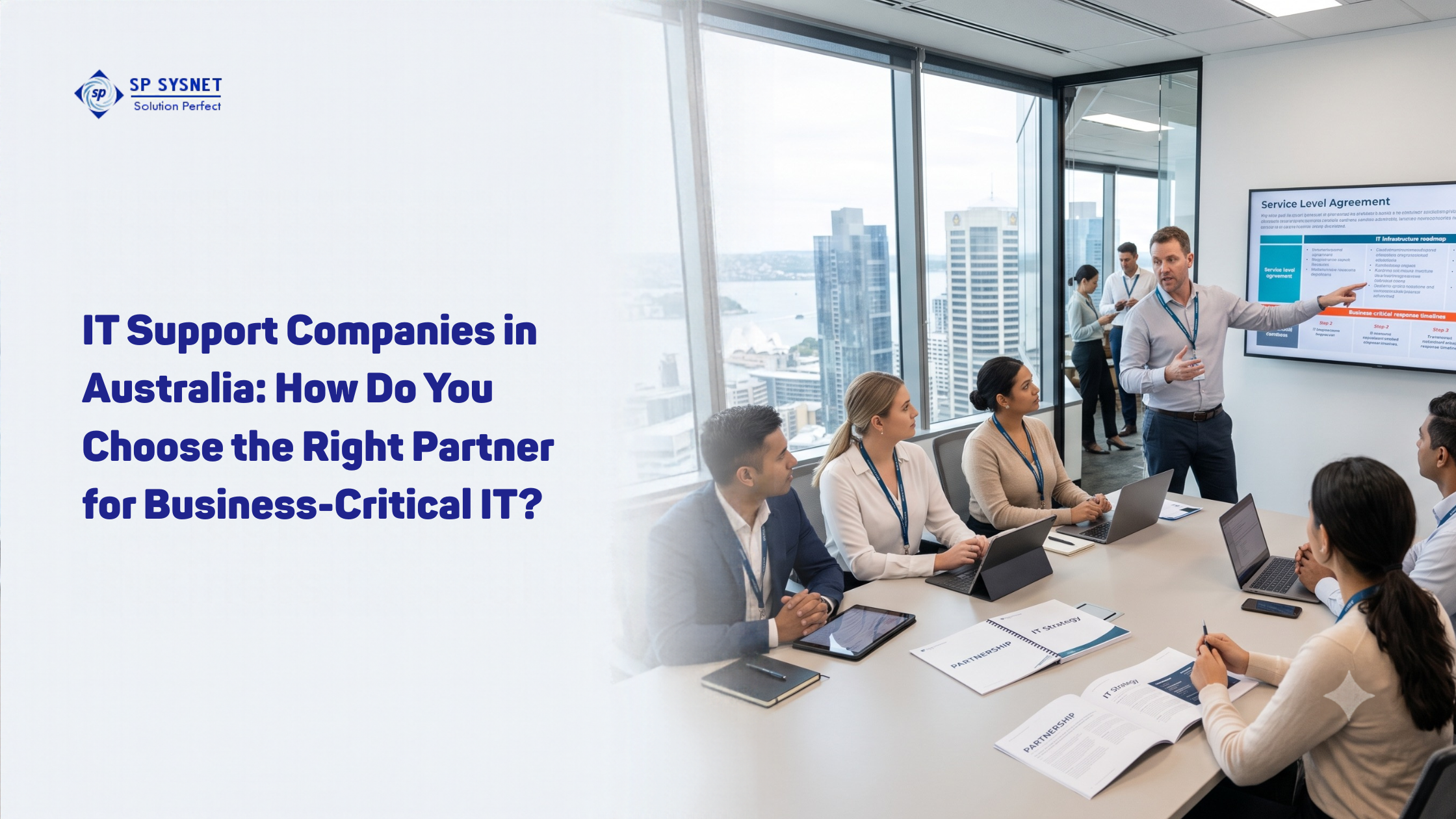
This is why choosing an IT support company in Australia is not simply about finding someone who can fix computers. The right partner should understand your business, respond when something goes wrong, and help prevent the same problem from happening again.
What Should You Expect From an IT Support Partner?
A good IT support relationship should go beyond reactive troubleshooting.
Businesses should look for support that covers areas such as:
- Network and infrastructure support
- Server management
- Cloud and application support
- Security monitoring
- Hardware and software assistance
- Backup and recovery
- Remote and onsite support
- Proactive maintenance
- IT planning and upgrades
The exact requirements will vary from one organization to another. A small business may need straightforward helpdesk support, while a larger organization may require support across multiple offices, servers, cloud environments, and business applications.
Read More: Looking for Reliable IT Support in Australia? Here’s What Businesses Prioritize
Is Your IT Support Mostly Reactive?
One useful question to ask is how your current IT provider handles problems.
Do they only respond after something breaks?
Or are they monitoring systems, identifying potential issues, maintaining infrastructure, and recommending improvements before problems affect employees?
Proactive support can make a significant difference. Regular monitoring and maintenance can help identify capacity issues, outdated systems, configuration problems, and other potential risks before they become major disruptions.
Can the Provider Support Your Business as It Grows?
Your IT requirements today may not be the same six months or two years from now.
A growing company may add employees, open new offices, move applications to the cloud, increase its data requirements, or introduce new business systems.
The IT support company you choose should be able to adapt to these changes.
Instead of constantly changing providers whenever your requirements become more complex, it can be more practical to work with a partner that can scale its support alongside the business.
What About Security?
IT support and cybersecurity are becoming increasingly connected.
A support provider may have access to servers, user accounts, applications, networks, and business data. That means security should be part of the conversation from the beginning.
Businesses should ask how the provider handles access management, monitoring, backups, patching, endpoint protection, and incident response.
Security should not be treated as an optional extra when business-critical systems are involved.
Does the Provider Understand Your Infrastructure?
Every organization has a different technology environment.
Some businesses operate mainly from physical offices. Others use a mix of on-premises servers, cloud applications, remote users, and multiple locations.
Before choosing a provider, make sure they understand your existing infrastructure and can work with the technologies you already depend on.
An experienced partner should be able to assess the current environment and suggest improvements based on actual business needs—not simply recommend replacing everything.
How Important Is Response Time?
When a critical system stops working, waiting hours for an answer can be expensive.
Ask potential providers about their support process, response times, escalation procedures, and availability. It is also worth understanding who handles critical incidents and how issues are communicated during an outage.
Clear expectations can prevent confusion when something urgent happens.
Choosing the Right Long-Term IT Partner
The best IT support relationship is not simply about solving today’s technical problems.
It should give the business confidence that its technology is being looked after properly while internal teams focus on their own responsibilities.
SP Sysnet provides managed IT, infrastructure, cloud, networking, security, and professional IT services, helping businesses manage their technology environment with a more structured and proactive approach.
Whether you need day-to-day technical support or are planning a larger infrastructure upgrade, the right partner should be able to understand where your business is today and where it needs to go next.
Ultimately, choosing an IT support company in Australia comes down to more than price. Look at technical capability, responsiveness, security practices, scalability, communication, and the provider’s willingness to take responsibility for the bigger IT picture.
When those pieces come together, IT support becomes more than a helpdesk—it becomes a reliable part of the business.
FAQs
- What should I look for in an IT support company in Australia?
Look for an IT support company with experience in your industry, fast response times, proactive monitoring, strong security practices, and the ability to scale services as your business grows. - Why should Australian businesses use a managed IT support company?
Managed IT support helps businesses reduce downtime, monitor systems proactively, manage security risks, and get ongoing technical assistance without maintaining a large in-house IT team. - How can an IT support company reduce business downtime?
By continuously monitoring infrastructure, identifying potential issues early, maintaining systems, managing backups, and providing quick technical support when problems occur. - Can an IT support company help with cybersecurity?
Yes. Many IT support providers offer services such as security monitoring, endpoint protection, patch management, access control, backup management, and other security measures. - Is outsourced IT support suitable for growing Australian businesses?
Yes. Outsourced IT support can give growing businesses access to technical expertise and infrastructure support without the cost of building a large internal IT department. - How do I know if my business has outgrown its current IT support provider?
Frequent downtime, slow support responses, recurring technical problems, limited scalability, poor security management, or a lack of strategic IT guidance can all indicate that it may be time to consider another provider.