
In trading, a small delay can matter. When market data is moving quickly and trading systems are processing a large number of events, the performance of the underlying infrastructure becomes an important part of the overall strategy.
This is why firms involved in algorithmic trading, high-frequency trading, and other time-sensitive financial applications pay close attention to servers, networking, connectivity, and data center infrastructure.
But choosing low-latency trading server services is not simply about selecting the server with the fastest processor. The complete infrastructure needs to be considered.
Start With the Trading Workload
Before selecting hardware, understand what the servers will actually be doing.
Different trading applications have different requirements. A system processing market data may have very different needs from one running complex calculations or executing trading strategies.
Consider:
- Market data volume
- Number of trading applications
- Processing requirements
- Memory requirements
- Network traffic
- Storage requirements
- Expected transaction volume
- Latency targets
Once these requirements are clear, it becomes easier to select an appropriate server configuration.
Why Does Server Hardware Matter?
For latency-sensitive trading applications, every part of the server can contribute to performance.
CPU selection, memory configuration, PCIe connectivity, BIOS settings, network adapters, and storage can all influence application behavior.
A properly configured server can help reduce unnecessary processing delays and provide more predictable performance.
This is also why simply buying a high-end server does not automatically create a low-latency environment. The hardware needs to be configured around the specific workload.
Read More: Cisco vs Arista Low Latency Switches: Which One Delivers Better Performance for Modern Networks?
Networking Is Just as Important
A fast server still depends on the network around it.
Trading firms should look at the complete connectivity path, including network interface cards, switches, optics, cables, and network configuration.
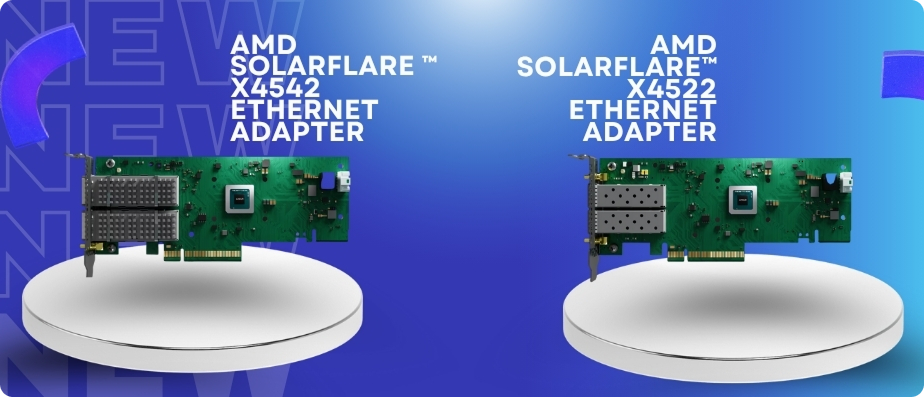
For certain environments, low-latency NICs and technologies designed to reduce network processing overhead can make a meaningful difference.
This is particularly important when applications need to receive market data and respond to events with very little delay.
What About Location and Data Center Connectivity?
Where the trading infrastructure is located can also matter.
Firms should consider proximity to exchanges and financial market connectivity, available cross-connects, network providers, rack and power availability, and the overall data center environment.
For businesses planning low-latency trading server services in India, these factors should be considered alongside server specifications.
A well-designed server in the wrong connectivity environment may not deliver the expected latency.
Don’t Ignore Time Synchronization
Accurate time synchronization is another important part of trading infrastructure.
Trading firms need reliable timestamps to understand when market events occur, when data is received, and when orders are processed. Accurate timing also helps teams measure and investigate latency across different parts of the infrastructure.
Depending on the environment, businesses may need dedicated time servers and suitable synchronization technologies.
When Should Firms Consider FPGA Acceleration?
Not every trading application requires FPGA technology.
However, FPGA acceleration can be useful for workloads where extremely low and predictable processing latency is important. Market data processing, feed handling, and certain order-processing workloads are examples where hardware acceleration may be considered.
The important point is to identify the actual bottleneck first.
If the problem is network configuration, application inefficiency, or an outdated server, adding an FPGA may not solve the underlying issue.
Look Beyond the Initial Server Purchase
Trading infrastructure needs ongoing attention.
When evaluating a service provider, businesses should consider whether they can support:
- Server deployment and configuration
- Low-latency networking
- Hardware upgrades
- Monitoring and troubleshooting
- Spare equipment
- Data center installation
- Connectivity testing
- Infrastructure refreshes
- Ongoing technical support
This becomes particularly useful when a trading environment grows or needs to be relocated.
Choose Infrastructure That Can Grow With You
Trading firms should avoid designing infrastructure only around today’s workload.
Market data volumes can increase. Applications can become more sophisticated. Trading strategies may change. Additional servers or connectivity may be required.
A scalable infrastructure plan makes it easier to accommodate these changes without rebuilding the entire environment.
SP Sysnet supports businesses with high-performance infrastructure requirements, including trading servers, networking, low-latency solutions, hardware, and related data center technologies.
The Right Approach to Low-Latency Trading Infrastructure
Choosing low-latency trading server services should be based on the complete trading environment rather than a single hardware specification.
Server performance, networking, connectivity, time synchronization, application requirements, data center location, and future scalability all need to work together.
For firms evaluating low-latency trading server services in India, the best starting point is to understand where latency is being introduced and then build the infrastructure around that requirement.
The objective is not simply to buy faster hardware. It is to create a trading environment where every part of the technology stack works together as efficiently and consistently as possible.
Frequently Asked Questions
What are low-latency trading server services?
Low-latency trading server services provide infrastructure designed for applications that require very fast and consistent processing. They can include server hardware, configuration, networking, connectivity, deployment, monitoring, and technical support.
What makes a trading server low latency?
Several factors contribute to low latency, including CPU and memory configuration, PCIe connectivity, network interface cards, operating system and application optimization, network design, and the physical connectivity between trading systems and market infrastructure.
Are low-latency trading servers only useful for high-frequency trading?
No. They can also be useful for algorithmic trading, market data processing, quantitative applications, and other financial workloads where fast and predictable response times are important.
Should trading firms use FPGA acceleration?
It depends on the workload. FPGA acceleration can be beneficial for specific time-sensitive processing tasks, but firms should first identify their actual bottlenecks and determine whether hardware acceleration provides enough benefit to justify its complexity and cost.
What should businesses check before choosing a trading infrastructure provider in India?
Look at the provider’s experience with trading infrastructure, servers, networking, low-latency technologies, data center deployment, connectivity, hardware support, and infrastructure upgrades. The provider should also understand the firm’s latency and workload requirements rather than recommending a generic server configuration.