
Choosing business software used to be fairly simple. A company needed accounting software, something for communication, and perhaps a basic system for managing customers or employees.
That has changed.
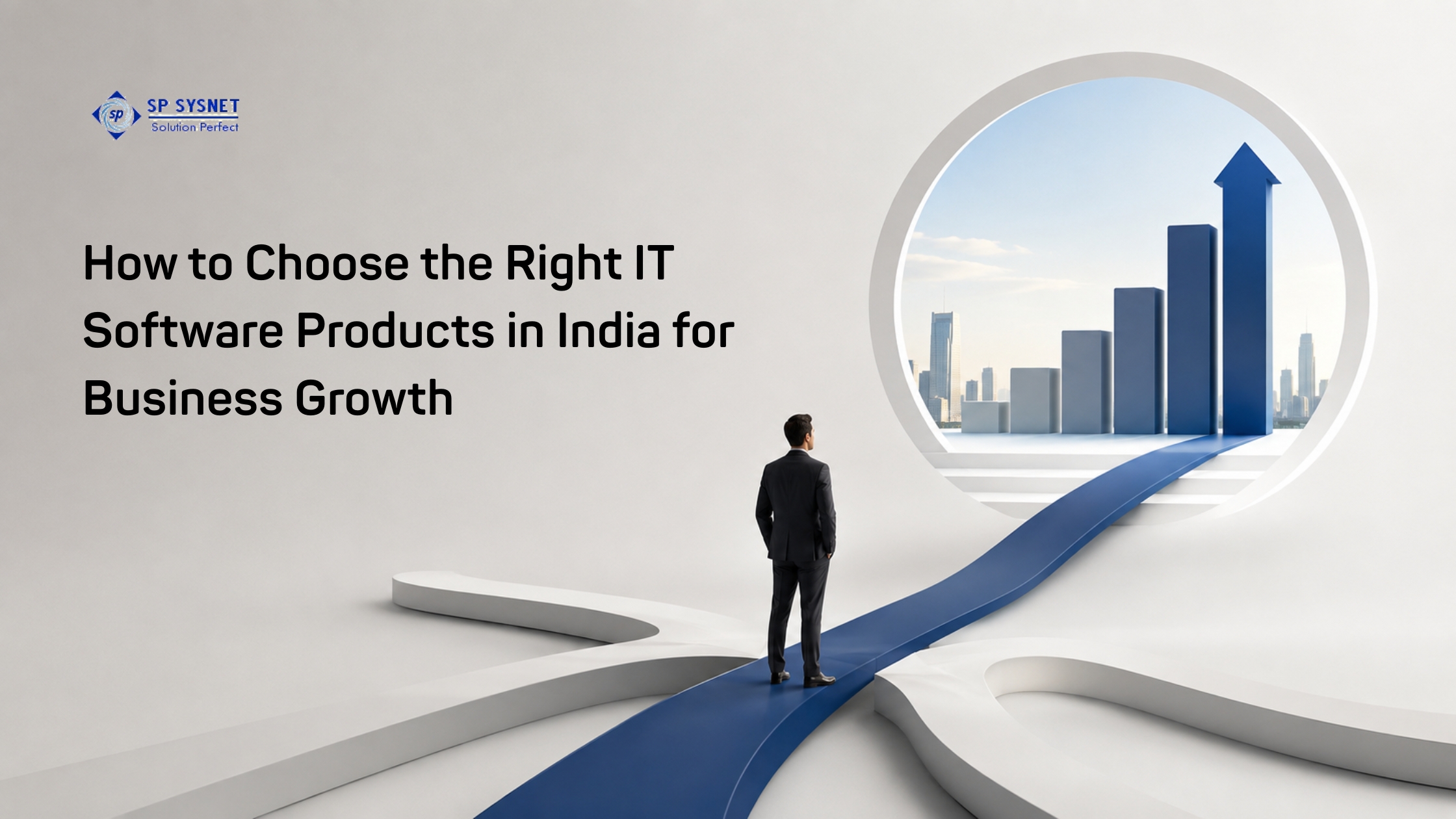
Today, businesses in India have access to everything from cloud applications and ERP platforms to CRM systems, cybersecurity tools, collaboration software, analytics platforms, and AI-powered solutions. With so many choices available, the real challenge is no longer finding software. It is finding the IT software products in India that actually fit the business.
The right software should make work easier, help teams make better decisions, and support growth without creating another layer of complexity.
Start With the Business Problem, Not the Software
One common mistake is choosing software because it has an impressive list of features.
Instead, start with a simple question: What problem are we trying to solve?
Maybe employees are spending too much time on manual tasks. Perhaps customer information is spread across different systems. Your finance team may need better reporting, or your sales team may need a clearer view of customer activity.
Once the problem is clear, it becomes much easier to compare software options.
Look at How the Software Will Grow With Your Business
A product that works well for a small team may not be suitable when the business doubles in size.
Before making a decision, consider how many users you may have in the next few years, whether you will open new offices, and whether your workload or data requirements are likely to increase.
Cloud-based solutions can offer useful flexibility here. Modern business platforms increasingly focus on scalability, integration, automation, and access to data across different functions.
The goal is simple: don’t choose software that you will quickly outgrow.
Check Integration Before You Make a Purchase
Your business probably already uses several applications. The new software should not operate like an island.
For example, CRM software may need to connect with finance systems. An ERP platform may need to exchange information with supply-chain applications. Security and identity tools may need to work with existing infrastructure.
Good integration can reduce duplicate data entry and give teams a more complete view of business operations.
This is becoming increasingly important as businesses move toward connected digital environments rather than individual standalone applications.
Don’t Ignore Security and Data Protection
Software handles some of a company’s most valuable information, including customer records, financial information, employee data, and business documents.
Security should therefore be considered before implementation, not after it.
Look at user access controls, authentication, data protection, backup options, vendor security practices, and how the product handles updates. Businesses should also consider the regulatory and data-protection requirements relevant to their industry.
A cheaper product is not necessarily cheaper if a security problem later creates operational or financial damage.
Consider the Total Cost, Not Just the Subscription
The price shown on a software website is only one part of the investment.
Think about implementation, migration, customisation, integration, training, support, upgrades, and additional users. A product with a slightly higher initial cost may provide better long-term value if it reduces manual work and is easier to manage.
This is where working with an experienced IT consulting company in India can be useful. Instead of selecting software based purely on price or popularity, businesses can evaluate how the product fits their existing technology environment and future plans.
Make the User Experience Part of the Decision
Even excellent software can fail if employees don’t want to use it.
Before committing, give the actual users an opportunity to test the platform. Is it easy to navigate? Can employees learn it without extensive training? Does it simplify their daily work?
A practical solution that employees use consistently is usually more valuable than a feature-heavy product that nobody enjoys using.
Think Beyond the Initial Implementation
Software selection is not the finish line.
Businesses should also think about what happens after deployment. Who will provide technical support? How will updates be handled? What happens when the company adds more users or needs a new integration?
SP Sysnet takes a practical approach to technology solutions, helping businesses look at software alongside their wider IT requirements rather than treating software as a standalone purchase.
India’s growing digital business ecosystem makes these decisions increasingly important. Recent data shows strong momentum in MSME digitisation, while AI and digital technologies are becoming a larger part of business investment.
The Right Software Should Make Growth Easier
There is no single software product that is right for every business.
The better choice depends on your company’s size, industry, processes, budget, security requirements, existing infrastructure, and growth plans.
Take time to understand the business requirement first. Compare integration and scalability, check security, calculate the complete cost, and involve the people who will actually use the software.
With the right approach, IT Software Products in India can become more than just business tools. They can help reduce repetitive work, improve visibility, support better decisions, and give growing businesses a stronger technology foundation.
SP Sysnet can help businesses evaluate and implement technology solutions with a focus on practical requirements, long-term usability, and business growth.
Frequently Asked Questions
What are IT software products used for in business?
IT software products help businesses manage activities such as finance, sales, customer relationships, operations, communication, data, security, and employee productivity. The right combination depends on the company’s specific requirements.
How should a business choose software in India?
Start by identifying the business problem, then compare products based on functionality, scalability, integration, security, cost, usability, and technical support. It is better to choose software around business requirements than simply selecting the most popular product.
Why is software integration important for businesses?
Integration allows different applications to share information and work together. This can reduce duplicate data entry, improve visibility, and make business processes more efficient.
Should Indian businesses choose cloud-based software?
Cloud software can provide flexibility, easier access, scalability, and simpler deployment. However, businesses should still evaluate security, connectivity, compliance, data requirements, and the vendor’s support before making a decision.
When should a business work with an IT consulting company in India?
An IT consulting company can be useful when a business is unsure which software to choose, needs to integrate multiple systems, is planning a technology upgrade, or requires help with implementation and ongoing IT management.