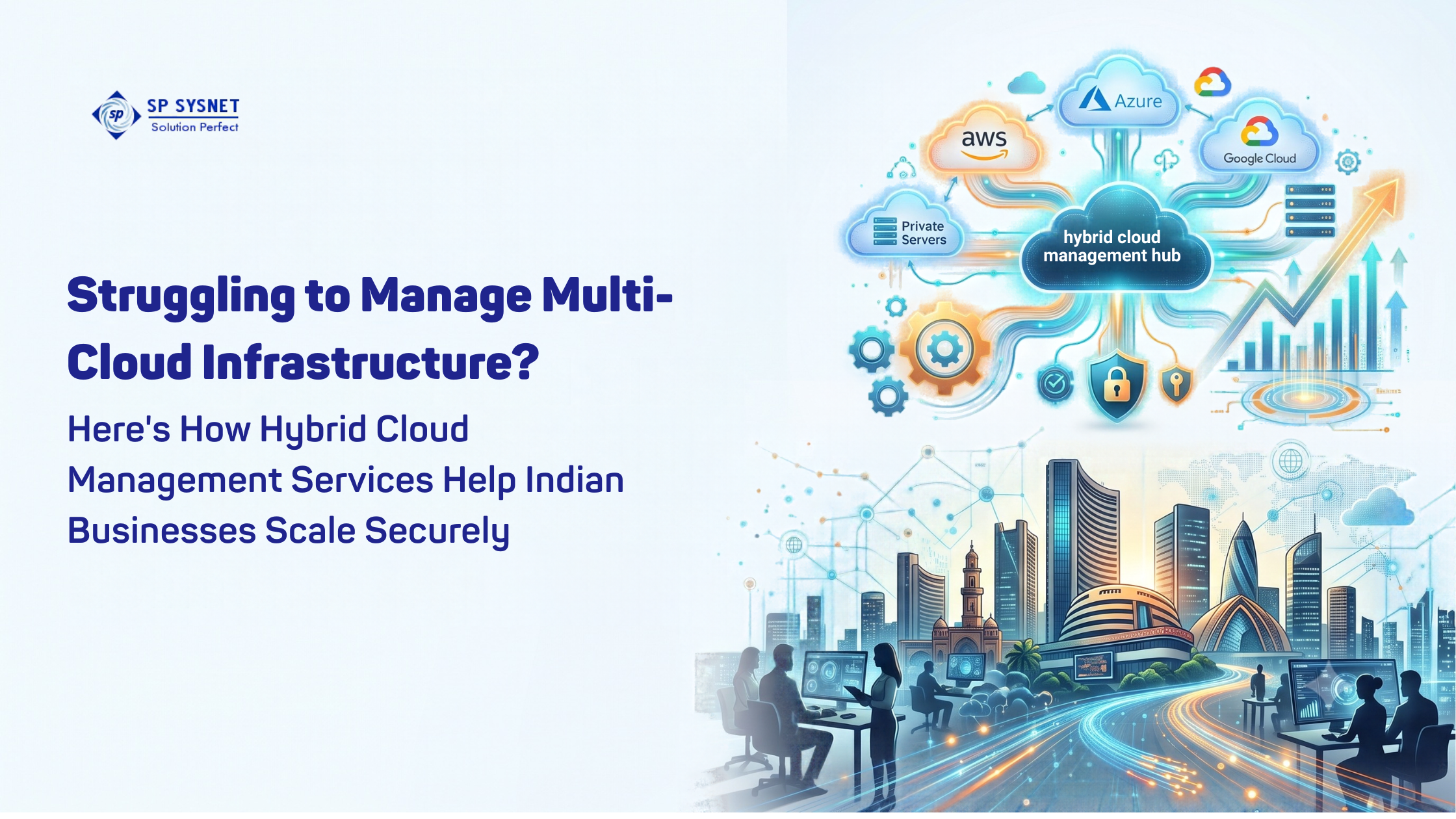

Using more than one cloud platform can give a business plenty of flexibility. But once workloads, applications, data, and users are spread across different environments, managing everything can become difficult.
One application may be running in one cloud, another workload may still be hosted on company servers, while backups or business data sit somewhere else. Add remote employees, security requirements, and growing data volumes, and the IT environment can quickly become complicated.
This is where Hybrid Cloud Management Services can make a real difference.
Instead of managing each environment separately, businesses can take a more organized approach to managing their entire infrastructure.
Why Are Businesses Moving Toward Hybrid Cloud Environments?
There is no rule saying that every business application has to live in the same place.
Some companies prefer keeping sensitive or legacy workloads on-premises while moving newer applications to the cloud. Others may use multiple cloud platforms because different applications work better on different environments.
A hybrid approach gives businesses the flexibility to choose where each workload makes the most sense.
For Indian businesses that are expanding, adding digital services, or modernizing older infrastructure, this flexibility can be especially useful. They can gradually move workloads instead of replacing their entire IT environment at once.
What Makes Multi-Cloud Management Difficult?
The problem usually starts when different environments are managed independently.
Teams may have separate monitoring tools, security policies, access controls, backup processes, and billing dashboards for different platforms. Finding the cause of a performance issue can then take much longer.
There can also be concerns around:
- Managing different cloud platforms
- Keeping user access under control
- Monitoring applications across environments
- Protecting data wherever it resides
- Controlling cloud spending
- Maintaining consistent backup and recovery policies
Without proper coordination, the flexibility of multi-cloud can turn into additional management overhead.
Read More: Hybrid Cloud Management Services Explained: Best Practices for Secure and Scalable IT Infrastructure
How Does Hybrid Cloud Management Make Things Easier?
The main advantage of Hybrid Cloud Management is having a more structured way to manage different infrastructure environments.
Instead of looking at individual servers or cloud platforms separately, IT teams can focus on the overall environment. Monitoring, security, resource management, performance checks, and operational processes can be planned around business requirements.
This does not mean every system has to be identical. It means the business has better visibility into what is happening across its infrastructure.
Can Hybrid Cloud Help Businesses Scale More Easily?
Yes, when it is planned properly.
Cloud resources can be scaled when demand increases, while existing infrastructure can continue supporting workloads that are not ready to move. This gives businesses more room to respond to changing requirements without making major infrastructure changes every time their workload grows.
For example, an organization may keep certain databases or legacy applications on-premises while using cloud resources for newer applications, backup, analytics, or additional capacity.
This gradual approach can make modernization less disruptive.
What About Security Across Multiple Environments?
Security becomes even more important when data and applications are spread across different platforms.
Businesses need consistent access policies, identity management, monitoring, encryption, backup strategies, and security controls. They also need visibility into who can access what and where sensitive information is being stored.
A hybrid environment should therefore be designed with security from the beginning rather than treating it as an additional layer after deployment.
How Can Indian Businesses Control Cloud Costs?
Using multiple cloud environments can make cost management harder because each platform has its own pricing structure and resource model.
Regular monitoring can help identify resources that are underused, oversized, or no longer required. Businesses can then make adjustments based on actual usage instead of simply continuing to pay for everything they have deployed.
A good management strategy should look at performance and cost together. Reducing spending should not mean removing resources that critical applications actually need.
When Should a Business Consider Hybrid Cloud Management?
It may be worth considering when the IT environment starts becoming difficult to manage or when the business is using a combination of on-premises infrastructure and multiple cloud platforms.
It can also be useful when companies are dealing with rapid growth, cloud migration projects, distributed teams, legacy applications, or increasing security and compliance requirements.
The goal is not to move everything to the cloud just because cloud technology is available. The goal is to build an environment where each workload is placed and managed in a way that makes sense for the business.
Frequently Asked Questions
What are Hybrid Cloud Management Services?
Hybrid Cloud Management Services help businesses manage a combination of on-premises infrastructure, private cloud, and public cloud environments. They can cover areas such as monitoring, security, performance, resource management, backup, and ongoing infrastructure support.
Is hybrid cloud better than using a single cloud?
Not always. The right choice depends on the business. Hybrid cloud can be useful when an organization needs to keep certain workloads on-premises while using cloud resources for scalability, flexibility, or newer applications.
How does hybrid cloud management improve security?
It can help businesses apply more consistent access controls, monitoring, backup practices, and security policies across different environments. Centralized visibility can also make it easier to identify unusual activity or infrastructure problems.
Can hybrid cloud management reduce IT costs?
It can. Better visibility into resource usage can help businesses identify unnecessary or underused resources. However, cost savings depend on how the environment is designed, monitored, and optimized.
Is hybrid cloud suitable for growing businesses in India?
Yes. Hybrid cloud can give growing businesses the flexibility to modernize gradually, expand cloud workloads when required, and continue using existing infrastructure where it remains practical.
What should businesses look for in a hybrid cloud management provider?
Businesses should look for experience across cloud and on-premises infrastructure, strong security practices, monitoring capabilities, migration knowledge, and ongoing technical support. The provider should also understand the company’s actual workloads instead of recommending a one-size-fits-all setup.
Managing Complexity Before It Becomes a Problem
Multi-cloud infrastructure can give businesses flexibility, but flexibility without proper management can quickly become complicated.
With the right planning and Hybrid Cloud Management Services, businesses can bring better visibility and control to their IT environment while keeping room for future growth.
For Indian businesses, the key is not simply choosing more cloud platforms. It is building a cloud environment that is secure, manageable, cost-conscious, and aligned with how the business actually operates.